Building Reliable Agentic AI Systems
The common objection: LLMs are non-deterministic, so they can't power reliable enterprise systems. That's true about the models but wrong about the conclusion, since reliability comes from system design, not model behavior.
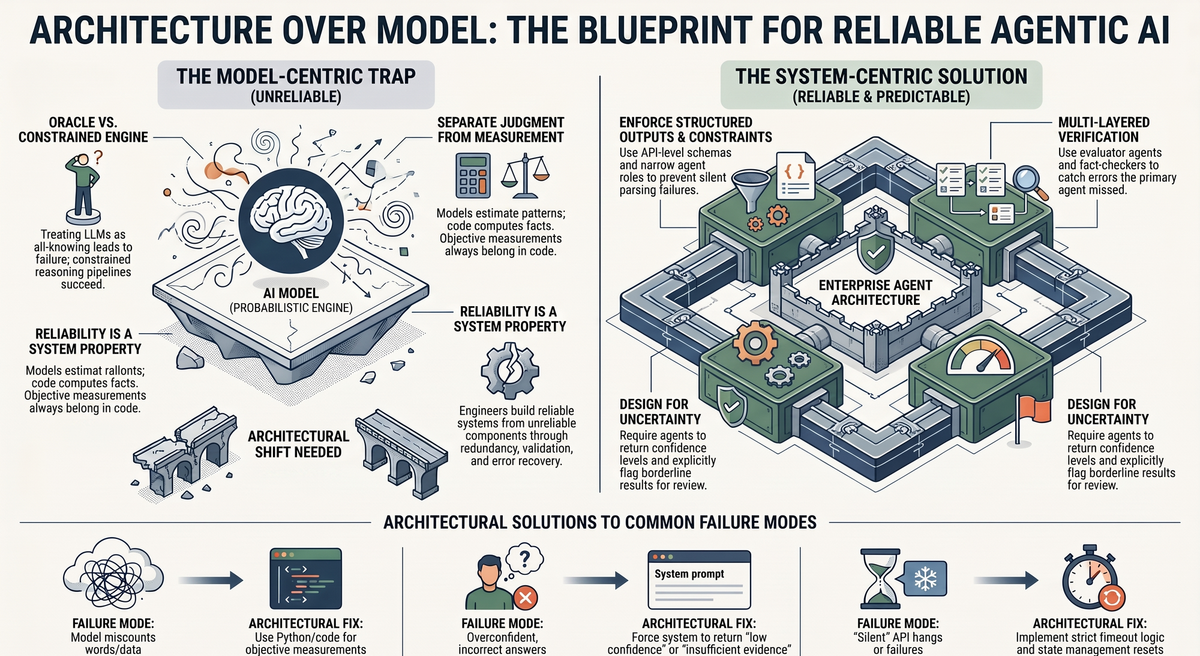
The most common objection to agentic AI is that language models are non-deterministic and therefore cannot support reliable enterprise systems. The objection is correct about the models. It is wrong about the conclusion.
Reliability in an agentic system is a property of system design, not model behavior. Organizations that treat the model as the reliability mechanism will fail. Organizations that treat the model as one component inside a disciplined architecture will succeed.
This paper presents six design principles drawn from building and testing a working agentic pipeline. Each principle addresses a specific failure mode. Together, they form a practitioner's framework for building systems that behave predictably despite running on non-deterministic components.
Applying these principles requires real engineering investment. The business case is straightforward: the alternative is AI that looks impressive in demonstrations and fails in production.
This paper presents six design principles, drawn from a working agentic pipeline, that define what reliable system architecture looks like in practice.