Enterprise AI Productivity and the ROI Dilemma
AI productivity gains do not become ROI automatically. Organizations need reinvestment, training, governance, and better measurement discipline.
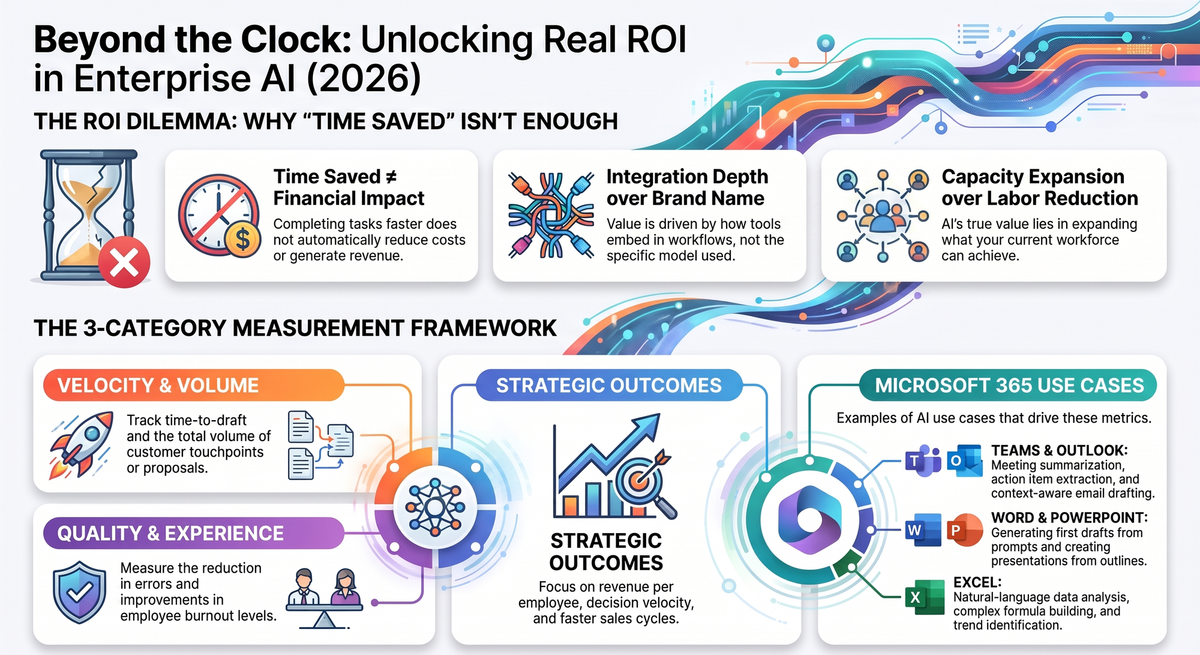
By mid-2026, the enterprise AI landscape has transitioned from a single-vendor model to a multi-vendor reality where Microsoft, OpenAI, Anthropic, and Google all offer deep integrations into core business applications. This report explains that integration depth and governance are now more critical than model names, as different tools provide varying levels of data access and editing capabilities.
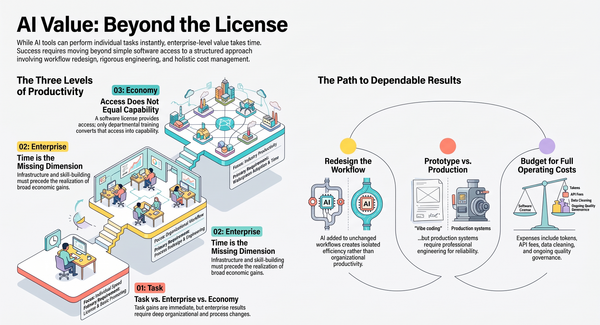
While AI promises significant productivity gains through automation and faster content creation, the text highlights a persistent ROI dilemma for leadership. CFOs are cautioned that simple time savings do not automatically translate to financial value unless that extra capacity is redirected toward strategic, high-value activities.
To successfully measure impact, organizations should adopt a five-category framework covering time, output, quality, employee experience, and business outcomes. Ultimately, achieving a competitive advantage requires structured training and human-AI collaboration rather than just purchasing software licenses.