The AI Guilt Tax
Employees are using AI tools to produce better work faster, but they're hiding it. This secrecy is costing organizations shared learning, efficiency gains, and innovation velocity
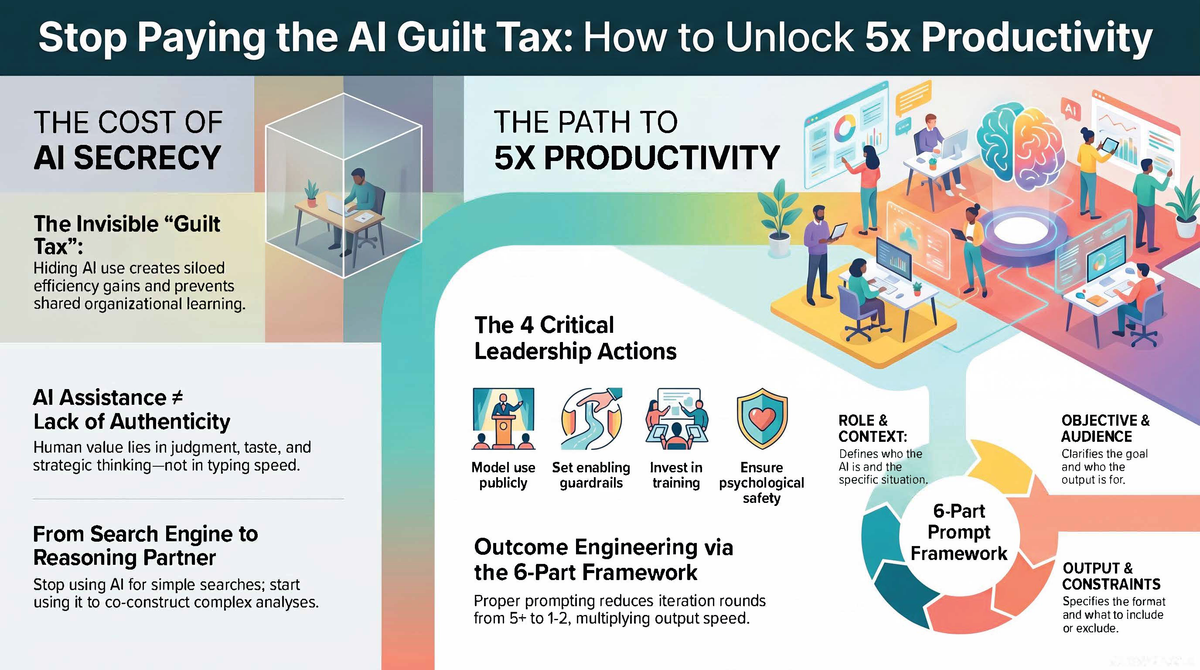
Right now, across organizations everywhere, a quiet paradox is playing out. Employees are using AI tools like ChatGPT and Claude to draft emails, brainstorm ideas, analyze data, and structure their thinking. The results are faster, better, and more polished than what they could produce alone.
But they're hiding it.
A communications professional hides using AI for email drafts despite excellent results. A creative director believes she shouldn't use AI for brainstorming because that's 'her job.' An analyst deletes his ChatGPT or Claude browser history before presentations, worried about dismissive comments. The underlying fear? 'Am I still valuable if AI helps me?'
The organizational cost is real. Organizations are paying for AI licenses while simultaneously creating a culture where people are afraid to admit they use them.