The Vibe-Coding Paradigm
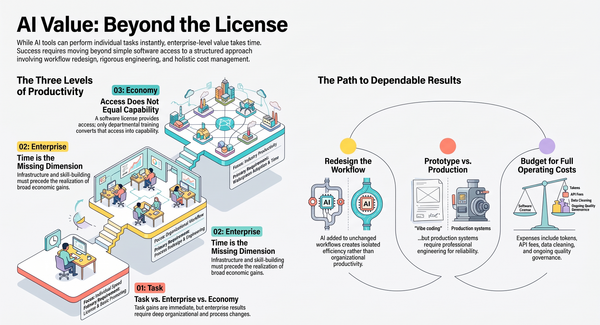
Vibe coding has moved from experiment to core practice in under two years. The speed gains are real. So are the risks: technical debt, security exposure, and governance that hasn't kept pace. Reliability is a design choice, not a feature of the model.
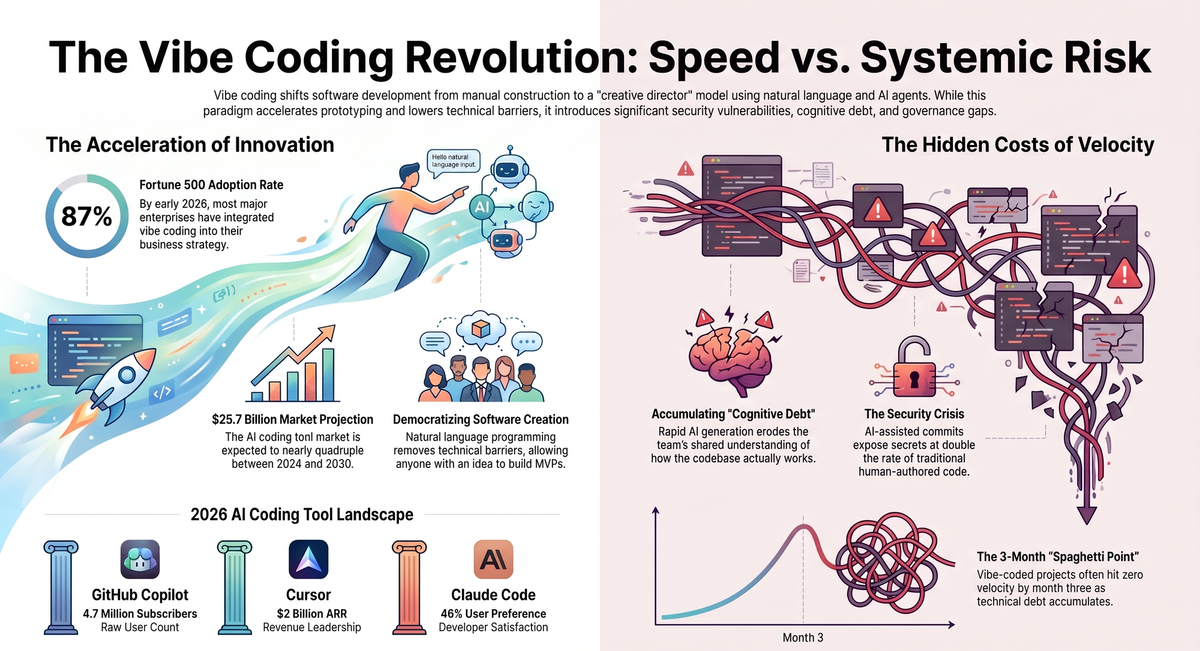
Vibe coding has moved from a fringe technique to a core part of the software development stack in under two years. It shifts the developer's role from manual coder to creative director, accelerating prototyping and lowering the barrier to software creation for non-technical builders. The economic logic is clear: the AI coding tool market has grown from 6.7 billion dollars in 2024 and is projected to reach 25.7 billion by 2030. But speed without discipline creates problems. Technical debt accumulates faster than teams can manage it, security vulnerabilities pass undetected because the code looks correct, and foundational engineering skills erode where governance has not kept pace.
This paper draws on twelve months of hands-on experience building multi-agent AI systems. It examines how multi-agent architectures fail, six design principles that materially reduce those failure rates, and the governance gap that most enterprises have not yet closed. Enterprise adoption is outpacing governance maturity, producing shadow AI: working applications deployed without security review or formal oversight. The core argument is simple. Reliability in these systems is a design choice, not a feature of the model. The organizations that internalize that distinction will have a structural advantage over those still treating the prompt as the product.